
By Discover Limestone Coast · · 7 min read
Australia's first great bush poet learned his country on the Limestone Coast - as a police trooper, a daredevil horseman and the owner of a cottage called Dingley Dell.
A remittance man arrives
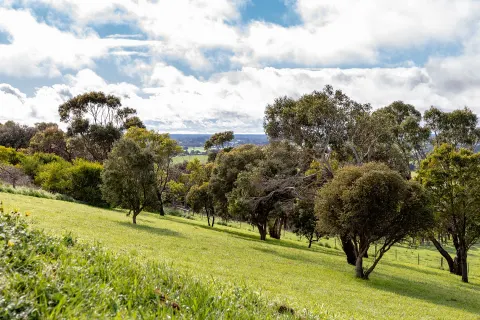
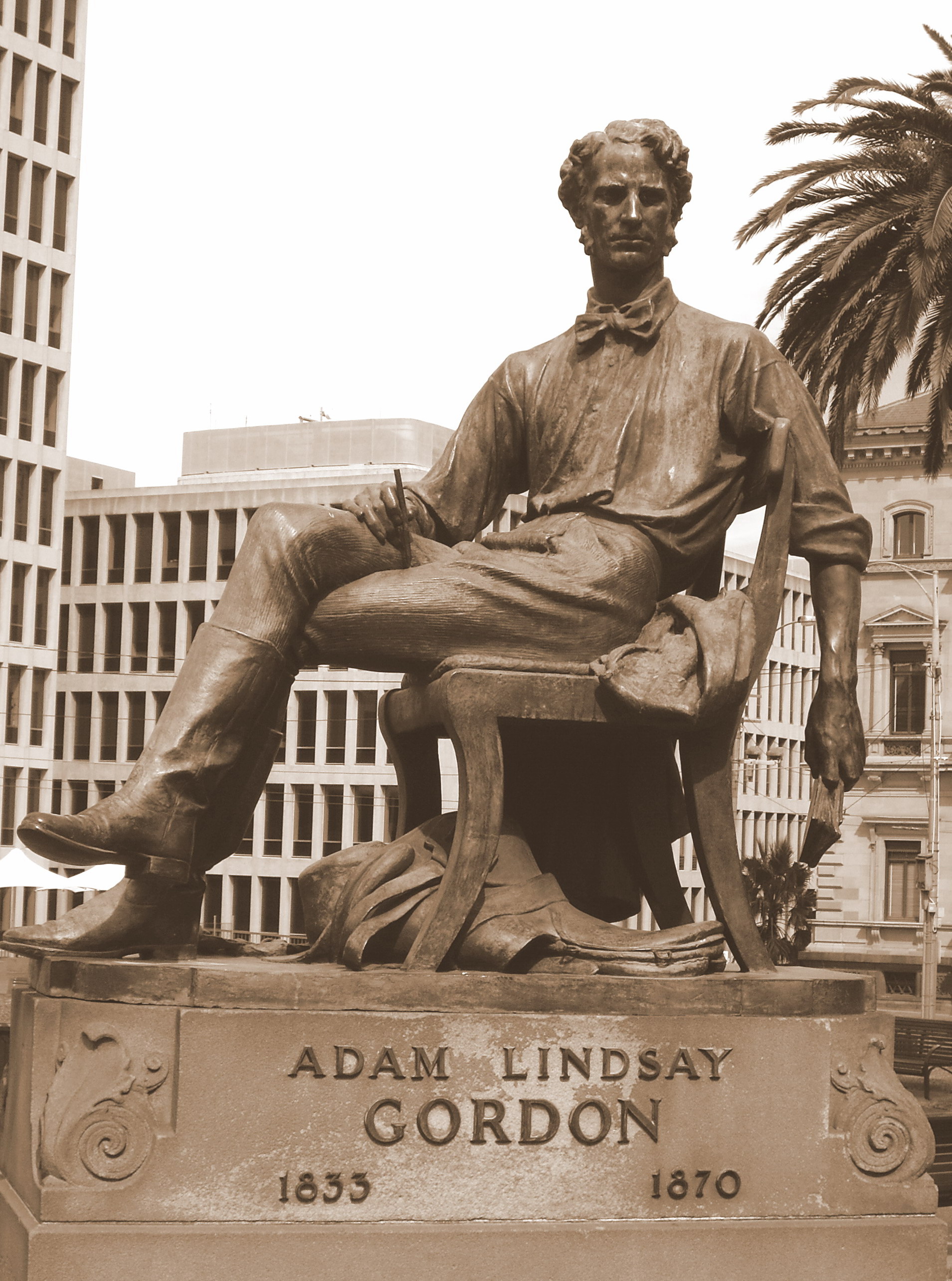
Adam Lindsay Gordon landed in Adelaide in 1853, a well-born young Englishman shipped to the colonies after a misspent youth. He joined the South Australian Mounted Police and was posted to the South East, riding the beats around Mount Gambier and Penola - country whose horsemen, races and reckless distances would soak into the poetry that later made him famous.
The leap
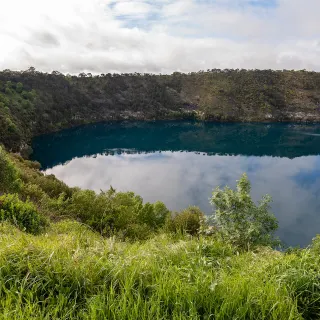
Gordon left the force and made his name as one of the colony's boldest steeplechase riders. His most famous feat came on 28 July 1864, when he turned his horse Red Lancer off the road beside the Blue Lake, cleared a four-foot post-and-rail fence onto a narrow ledge above the crater, swung around on the strip of ground between fence and drop, and jumped back out again. The spot is marked today by an obelisk whose foundation stone was laid in 1887 by his old friend John Riddoch of Yallum Park - the Penola pastoralist at whose table Gordon was a welcome guest.
Dingley Dell
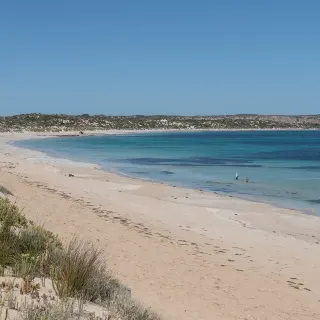
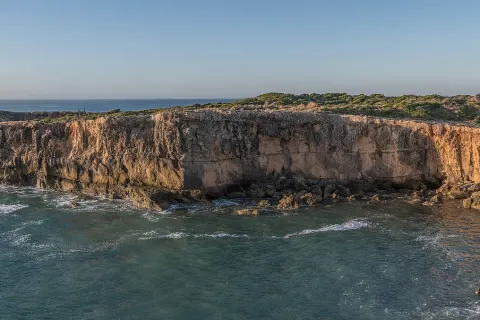
That same year Gordon paid £350 for a stone cottage in the coastal scrub near Port MacDonnell and named it Dingley Dell, after the cheerful manor farm in Dickens. He and his wife Maggie spent two happy years there, riding the beaches below the southern port before life pulled them to Victoria. The cottage survives, preserved with its gardens and interpretive displays inside Dingley Dell Conservation Park - one of the most atmospheric literary sites in Australia.
The legend
Gordon's later life was brief and tragic: celebrated as a poet, hopeless with money, he died by his own hand near Melbourne in 1870, the day after his final book was published. Fame arrived afterwards, on a scale few Australian writers have known - he remains the only Australian poet honoured with a bust in Poets' Corner at Westminster Abbey.
On the Limestone Coast, though, he is still the young trooper and the mad horseman: the leap above the blue water, the cottage in the scrub. He shares Penola's literary memory with another remarkable figure of the same decade - see our story on Mary MacKillop and Penola.