Heritage & History
Saints, shipwrecks & colonial ports
The best heritage & history in Limestone Coast
This is the country of Australia's first saint, Mary MacKillop, of grand colonial ports like Robe that once landed thousands of Chinese gold-seekers, and of lighthouses standing watch over a notorious shipwreck coast.
Read our guide to heritage & history ↓Browse heritage & history by area
Map shows the 24 places on this page.
Admella Discovery Trail
View →A coastal heritage trail commemorating the 1859 wreck of the SS Admella, one of Australia's worst maritime disasters.
Aquifer Tour
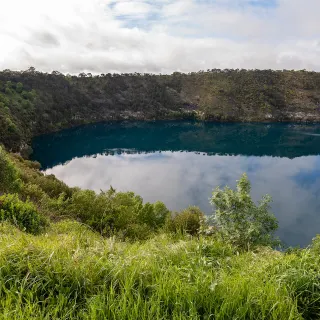
View →A glass-panelled lift descends the historic Blue Lake pump station to a viewing platform at the water's edge.
Beachport Jetty Free
View →One of Australia's longest jetties
A 772-metre jetty reaching out over clear water at Beachport, a favourite for fishing, walking and watching the fishing fleet.
Beachport Visitor Information Centre
View →Local history and trip-planning in the heart of Beachport.
Beacon Hill Lookout $
View →A coastal lookout above Robe crowned by an old navigation beacon, with sweeping views over Guichen Bay.
Blanche Cave $$
View →One of Naracoorte's grand show caves, with vast chambers, fossil deposits and a long history of public tours.
Blue Lake Pumping Station
View →Historic waterworks drawing the city's drinking water from the Blue Lake.
Cape Banks Lighthouse Free
View →A lighthouse on a wild coast
A skeletal steel lighthouse on a remote, wreck-strewn stretch of coast near Carpenter Rocks, watching over reefs that claimed many ships.
Cape Jaffa Lighthouse $
View →A relocated reef lighthouse
A heritage lighthouse, once built on a treacherous offshore reef, now reassembled in Kingston SE as a museum you can climb.
Cape Martin Lighthouse
View →Beachport's working light
Beachport's mainland lighthouse, first lit in 1960 with the apparatus from the 1878 Penguin Island light that still stands abandoned just offshore.
Cape Northumberland
View →South Australia's southernmost point, a windswept cape near Port MacDonnell with a lighthouse, blowholes and a little penguin colony.
Cave Garden (Thugi) Free
View →A cave in the city centre
A dramatic limestone sinkhole and waterfall in the heart of Mount Gambier, of deep cultural significance to the Boandik people.
Centenary Tower $
View →The stone tower crowning Mount Gambier's highest point, with a climb rewarded by 360-degree views over the crater lakes and far out to the coast.
Dingley Dell Conservation Park
View →The restored cottage home of bush poet Adam Lindsay Gordon, set in a small coastal conservation park.
Father Woods Park
View →Chainsaw sculptures and a saint's story
A wayside park north of Penola where seven chainsaw-carved sculptures tell the life of Father Julian Tenison Woods, co-founder with Mary MacKillop of the Josephites.
Glencoe Woolshed
View →Australia's great unmechanised shearing shed
A grand 1863 stone woolshed with 36 blade-shearing stands, built by the Leake brothers and preserved by the National Trust - never converted to machines.
John Riddoch Interpretive Centre $
View →Penola's visitor and interpretive centre, telling the linked stories of the town, the Riddoch family and Coonawarra wine.
Kangaroo Inn Ruins
View →A wayside inn from the coaching days
The stabilised limestone ruins of an 1861-licensed wayside inn on the old Robe to Mount Gambier road, now on the State Heritage Register.
Lady Nelson Visitor & Discovery Centre
View →A full-size brig replica marking the European discovery of the region.
Larry the Lobster (The Big Lobster) Free
View →The Big Lobster
Kingston SE's 17-metre fibreglass rock lobster, one of Australia's best-loved "big things" and a tribute to the local crayfishing industry.
Mary MacKillop Penola Centre $
View →Australia's first saint
The museum and heritage precinct telling the story of St Mary MacKillop, who founded her first school for all children in Penola in 1866.
Millicent National Trust Museum
View →A sprawling regional museum in Millicent, home to the Geltwood shipwreck relics and a vast pioneer collection.
Minijumbuk
View →The wool story behind Naracoorte's pastoral fortunes.
Naracoorte Caves National Park $$
View →World Heritage fossil caves
South Australia's only World Heritage site, a network of fossil-rich limestone caves preserving 500,000 years of Australian megafauna.
About heritage & history in Limestone Coast
Few parts of South Australia wear their history as openly as the Limestone Coast. In Penola, the Mary MacKillop Penola Centre marks the spot where Australia's first saint co-founded the Sisters of St Joseph in 1866, while the Petticoat Lane precinct preserves the town's oldest cottages.
The coast tells a seafaring story of its own. Robe grew rich as a 19th-century port - its Customs House and clifftop Obelisk recall the days when thousands of Chinese miners landed here to walk to the Victorian goldfields. Lighthouses at Cape Banks and Cape Jaffa, and the deep human past recorded in the Naracoorte Caves, stretch the timeline back hundreds of thousands of years.
Most heritage sites cluster within walking distance in the historic town centres, making them easy to explore on foot. Interpretive centres and guided tours bring the stories to life, and many pair naturally with the region's wineries and coastal drives.
Heritage & History in Limestone Coast - frequently asked questions
What is the Limestone Coast known for when it comes to heritage and history?
The Limestone Coast is the cradle of Australia's first saint, Mary MacKillop, who co-founded the Sisters of St Joseph in Penola in 1866. It is also famous for grand colonial ports like Robe, which landed more than 16,000 Chinese gold-seekers in the late 1850s, and for a notorious shipwreck coast watched over by lighthouses such as Cape Northumberland. Add to that the World Heritage fossil caves at Naracoorte, and the region wears layers of saintly, maritime and ancient history side by side.
Where can I learn about Mary MacKillop in the Limestone Coast?
Penola is the heart of the Mary MacKillop story, where the Mary MacKillop Penola Centre marks the spot she co-founded the Sisters of St Joseph in 1866. Visitors can see the historic Woods-MacKillop Schoolhouse and walk the adjacent Petticoat Lane, a heritage area lined with 19th-century cottages. The Centre is generally open daily with a small admission fee, though it is best to check current hours before you travel.
What is the story behind Robe's Chinese history and the Obelisk?
In the late 1850s and early 1860s more than 16,000 Chinese gold-seekers landed at Robe to avoid a £10 head tax charged at Victorian ports, then walked roughly 320 kilometres overland to the Ballarat and Bendigo diggings. The trade brought a boom that built many of Robe's surviving colonial buildings. The town's striking red-and-white Obelisk, erected in 1855 to guide ships into the bay, remains one of the most photographed heritage landmarks on the coast.
Can I visit the shipwreck sites along the Limestone Coast?
The coast around Carpenter Rocks and Cape Banks is where the SS Admella struck a reef in August 1859, with the loss of 89 lives in one of Australia's worst maritime disasters. While the wreck itself lies offshore and is protected under the Historic Shipwrecks Act, you can follow the free, self-drive Admella Discovery Trail, which links interpretive sites along the rescue route. Pair it with a visit to historic lighthouses like Cape Northumberland for the full shipwreck-coast story.
Are the heritage attractions in the Limestone Coast family friendly and do I need to book?
Many sites are easy family outings - Penola's heritage walks, Robe's foreshore and Mount Gambier's Umpherston Sinkhole and Centenary Tower can all be explored at your own pace. The exception is the World Heritage Naracoorte Caves, where park entry is free but guided cave tours carry a fee and should be booked, especially the popular Victoria Fossil Cave and adventure caving tours. Cooler months are pleasant for walking the towns, while the caves stay a comfortable temperature year-round.